Translate

Search This Blog

Showing posts with label wikipedia. Show all posts

Sunday, 6 May 2018

Wikipedia article of the day for May 7, 2018

The Wikipedia article of the day for May 7, 2018 is The Fountainhead.
The Fountainhead is a 1943 novel by Russian-American author Ayn Rand. The protagonist, Howard Roark, is an individualistic young architect who designs modernist buildings and refuses to compromise with an architectural establishment unwilling to accept innovation. Roark embodies what Rand believed to be the ideal man, and his struggle reflects Rand's belief that individualism is superior to collectivism. Twelve publishers rejected the manuscript before an editor at the Bobbs-Merrill Company risked his job to get it published. Contemporary reviewers' opinions were mixed. Some praised the novel as a powerful paean to individualism, while others thought it overlong and lacking sympathetic characters. Initial sales were slow, but the book gained a following by word of mouth. It became a bestseller, and more than 6.5 million copies have been sold worldwide. The novel was Rand's first major literary success and has had a lasting influence, especially among architects and right-libertarians.

Sunday, 29 April 2018

Wikipedia article of the day for April 30, 2018

The Wikipedia article of the day for April 30, 2018 is Louisiana Purchase Exposition dollar.
The Louisiana Purchase Exposition dollar was a commemorative gold coin series dated 1903. The coins were designed by Charles E. Barber, Chief Engraver of the United States Bureau of the Mint. The pieces were issued to promote the Louisiana Purchase Exposition held in 1904 in St. Louis. They were struck in two varieties at the urging of exposition authorities, including numismatic promoter Farran Zerbe: one depicted former president Thomas Jefferson, and the other, the recently assassinated president William McKinley. The price for each variety was $3, the same cost whether sold as a coin, or mounted in jewelry or on a spoon. Although not the first American commemorative coins, they were the first in gold. They were intended to help fund the Exposition, originally scheduled to open in 1903. Congress authorized the coins in 1902, but they did not sell well, and most were later melted. They regained their issue price by 1915, and are now worth between a few hundred and several thousand dollars, depending on condition.

Saturday, 28 April 2018

Wikipedia article of the day for April 29, 2018

The Wikipedia article of the day for April 29, 2018 is Subfossil lemur.
Subfossil lemurs are primates from Madagascar, especially the extinct giant lemurs, represented by subfossils (partially fossilized remains) dating from nearly 26,000 to around 560 years ago. Almost all of these species, including the sloth lemurs, koala lemurs and monkey lemurs, were living around 2,000 years ago, when humans first arrived on the island. The extinct species are estimated to have ranged in size from slightly over 10 kg (22 lb) to roughly 160 kg (350 lb). The subfossil sites found around most of the island demonstrate that most giant lemurs had wide distributions. Like living lemurs, they had poor day vision and relatively small brains, and developed rapidly, but they relied less on leaping, and more on terrestrial locomotion, slow climbing, and suspension. Although no recent remains of giant lemurs have been found, oral traditions and reported recent sightings by Malagasy villagers suggest that there may be lingering populations or very recent extinctions.

Monday, 23 April 2018

Wikipedia article of the day for April 24, 2018

The Wikipedia article of the day for April 24, 2018 is 1867 Manhattan, Kansas earthquake.
The 1867 Manhattan earthquake struck Riley County, Kansas, in the United States on April 24. The strongest earthquake to originate in the state, it measured 5.1 on a seismic scale based on reports of how strongly it was felt in the area. Its epicenter was near the town of Manhattan. On the Mercalli intensity scale, its maximum perceived intensity was VII, "very strong". There were reports of minor damage in Kansas, Iowa, and Missouri, according to the U.S. Geological Survey. It was felt as far away as Indiana and Illinois, and perhaps Ohio, though the latter reports have been questioned. Manhattan is near the Nemaha Ridge, a long anticline structure that is bounded by several faults. A 2016 hazard map from the U.S. Geological Survey estimated a 1% or lower risk for a major earthquake in Kansas for the following year, though the nearby Humboldt Fault Zone continues to pose a threat to the city, and scientists from the agency think an earthquake of magnitude 7.0 remains possible.

Sunday, 22 April 2018

Wikipedia article of the day for April 23, 2018

The Wikipedia article of the day for April 23, 2018 is The Destroying Angel and Daemons of Evil Interrupting the Orgies of the Vicious and Intemperate.
The Destroying Angel and Daemons of Evil Interrupting the Orgies of the Vicious and Intemperate is an oil painting by English artist William Etty, first exhibited in 1832. With this openly moral piece, Etty hoped to respond to critics who found his nude paintings indecent and in poor taste. It depicts a classical temple under attack from a destroying angel and a group of daemons. Some of the occupants are dead or unconscious; others flee in terror or struggle against the daemons. When first exhibited The Destroying Angel was widely praised for its technical brilliance, but critics were divided on the subject matter. Some praised its vividness and ability to mix fear and beauty without descending into tastelessness; others criticised its theme as inappropriate, and chastised Etty for wasting his talents. Joseph Whitworth donated the painting in 1882 to the Manchester Art Gallery, where it remains.

Saturday, 21 April 2018

Wikipedia article of the day for April 22, 2018

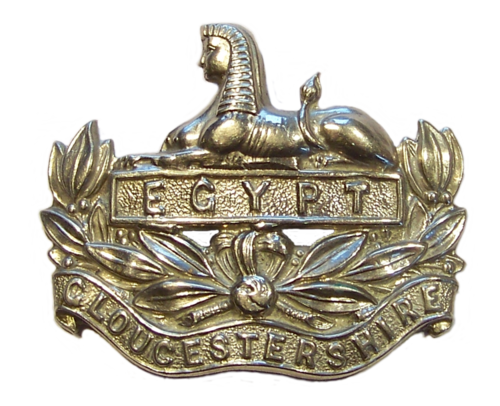
The Wikipedia article of the day for April 22, 2018 is Gloucestershire Regiment.
The Gloucestershire Regiment (1881–1994) was a line infantry regiment of the British Army, formed from two regiments originally raised in 1694 and 1758, which first saw action in the Second Boer War. During the First World War, 16 battalions fought under the regiment’s colours, winning 72 different battle honours. In the Second World War, the 2nd and 5th Battalions fought in the Battle of France. Most of the 2nd Battalion soldiers were taken prisoner in the Battle of Dunkirk, but the rebuilt unit returned to France on D-Day at Gold Beach. The 1st Battalion saw action during the Japanese conquest of Burma, and the 10th Battalion fought in the Burma Campaign 1944–45. During the Korean War, the 1st Battalion held out for three nights against overwhelming Chinese forces in the Battle of the Imjin River, and received the American Presidential Unit Citation. The stand was described by the commander of the United Nations forces as "the most outstanding example of unit bravery in modern war".

Friday, 20 April 2018

Wikipedia article of the day for April 21, 2018

The Wikipedia article of the day for April 21, 2018 is Neferirkare Kakai.
Neferirkare Kakai was an ancient Egyptian pharaoh, the third king of the Fifth Dynasty. The eldest son of the previous pharaoh, Sahure, he reigned for eight to eleven years, sometime in the early-to-mid 25th century BCE. His contemporaries viewed him as a kind and benevolent ruler, willing to intervene on behalf of his courtiers. During his rule the number of administration and priesthood officials increased, and they used their expanded wealth to build sophisticated mastabas (tombs) where they recorded their biographies for the first time. He was the last pharaoh to significantly modify the royal naming conventions, separating the throne name from the birth name, in front of which he added the "Son of Ra" epithet. In the royal necropolis of Abusir he started a pyramid for himself conceived as a step pyramid, a form not seen since the Third Dynasty about 120 years earlier. A modified plan represented the monument as a true pyramid, the largest in Abusir, but this pyramid was never completed.

Monday, 16 April 2018

Wikipedia article of the day for April 17, 2018

The Wikipedia article of the day for April 17, 2018 is Murder of Yvonne Fletcher.
Yvonne Fletcher was fatally wounded on 17 April 1984 by a shot coming from the Libyan embassy on St James's Square in London. She had been deployed as a constable of the Metropolitan Police to monitor a demonstration against the Libyan leader Muammar Gaddafi. During the protest, two unknown gunmen opened fire with Sterling submachine guns, killing Fletcher and wounding eleven Libyans. The inquest found that she was "killed by a bullet coming from one of two windows on the west side of the front on the first floor of the Libyan People's Bureau". After an eleven-day siege of the embassy, those inside were expelled from the United Kingdom, and diplomatic relations with Libya were severed. In 1999 a warming of diplomatic relations with Britain led to the payment of compensation and a statement from the Libyan government admitting culpability in Fletcher's shooting. British police continued their investigation until 2017, but no one has been convicted of Fletcher's murder.

Sunday, 15 April 2018

Wikipedia article of the day for April 16, 2018

The Wikipedia article of the day for April 16, 2018 is William T. Stearn.
William T. Stearn (16 April 1911 – 9 May 2001) was a British botanist. Born in Cambridge in 1911, he was largely self-educated. He was librarian at the Royal Horticultural Society in London from 1933 to 1952 and then moved to the Natural History Museum as a scientific officer in the botany department until 1976. After retirement, he became President of the Linnean Society and taught botany at Cambridge University. He is known for his work in botanical taxonomy, botanical history, and botanical illustration and for his studies of the Swedish scientist Carl Linnaeus. He is the author of Botanical Latin, as well as the Dictionary of Plant Names for Gardeners, a popular guide to the Latin names of plants. He was made a Commander of the Order of the British Empire in 1957. Considered one of the most eminent British botanists of his time, he is the botanical authority for over 400 plants that he named and described. An essay prize in his name from the Society for the History of Natural History is awarded each year.

Saturday, 14 April 2018

Wikipedia article of the day for April 15, 2018

The Wikipedia article of the day for April 15, 2018 is Sinking of the RMS Titanic.
The sinking of the RMS Titanic in the early morning of 15 April 1912, four days into the ship's maiden voyage from Southampton to New York City, was one of the deadliest peacetime maritime disasters in history, killing more than 1,500 people. The largest passenger liner in service at the time, Titanic had an estimated 2,224 people on board when she struck an iceberg in the North Atlantic. The ship had received six warnings of sea ice but was travelling at near maximum speed when the lookouts sighted the iceberg. Unable to turn quickly enough, the ship suffered a glancing blow that buckled the starboard (right) side and opened five of sixteen compartments to the sea. The disaster caused widespread outrage over the lack of lifeboats, lax regulations, and the unequal treatment of the three passenger classes during the evacuation. Inquiries recommended sweeping changes to maritime regulations, leading to the International Convention for the Safety of Life at Sea (1914), which continues to govern maritime safety.

Friday, 13 April 2018

Wikipedia article of the day for April 14, 2018

The Wikipedia article of the day for April 14, 2018 is Urse d'Abetot.
Urse d'Abetot (c. 1040 – 1108) was a Sheriff of Worcestershire and royal official under Kings William I, William II and Henry I. Urse's lord in Normandy was present at the Battle of Hastings, and Urse moved to England shortly after the Norman Conquest, where he was appointed sheriff around 1069. His castle in the town of Worcester encroached on the cathedral cemetery there, angering the Archbishop of York. He helped to put down a rebellion against King William I in 1075, and quarrelled with the Church in his county over the jurisdiction of the sheriffs. He continued in the service of William's sons after the king's death, and was appointed constable under William II and marshal under Henry I. He earned a reputation for extortion, and during the reign of William II, he was considered second only to the king's minister Ranulf Flambard in his greediness. Through his daughter, Urse is an ancestor of the Beauchamp family, who eventually became Earls of Warwick.

Tuesday, 10 April 2018

Wikipedia article of the day for April 11, 2018

The Wikipedia article of the day for April 11, 2018 is Washington State Route 520.
State Route 520 (SR 520) is a 13-mile (21 km) state highway and freeway in the Seattle metropolitan area in the U.S. state of Washington. Connecting Seattle to the Eastside region of King County across the Evergreen Point Floating Bridge on Lake Washington, it intersects Interstate 5 (I-5) in Seattle, I-405 in Bellevue, and SR 202 in Redmond. It was designated as a freeway in 1964, but was not fully constructed until the late 1970s. Increased traffic on the corridor, spurred in part by expansion of the Microsoft headquarters in Overlake, led to the addition of high-occupancy vehicle lanes and new interchanges in the 1990s. In April 2016, the original floating bridge was replaced by a wider one as part of a multibillion-dollar expansion program that is scheduled to be completed in the 2020s. The program includes the construction of a new bicycle and pedestrian path, bus stations, and interchanges.